Hasselback Butternut Squash is a simple yet elegant roasted vegetable dish that looks beautiful and tastes amazing. The squash is carefully sliced into thin sections without cutting all the way through. This special technique allows oil, butter, and seasonings to flow between the slices while roasting. As it cooks, the edges become lightly crisp while the inside turns soft and tender.

This dish is very popular during the fall and holiday season in the United States. Butternut squash is naturally sweet and full of flavor at this time of year. The Hasselback style helps the squash roast evenly and develop a rich, golden color. With its soft texture, crispy edges, and warm seasonal taste, Hasselback Butternut Squash makes a perfect and impressive side dish.
Table of Contents
Learn About Hasselback Butternut Squash?
Hasselback Butternut Squash is a roasted vegetable dish where the squash is sliced into thin cuts without cutting all the way through. This method allows the squash to open slightly during roasting while still holding its shape.
The Hasselback technique originally became popular through Hasselback potatoes, which were first served in Sweden. The name comes from the Hasselbacken restaurant in Stockholm, where this style of slicing potatoes was introduced.
When applied to squash, the same slicing technique works beautifully. The thin cuts help the seasoning, butter, oil, and herbs reach deeper into the vegetable. As the squash roasts, the slices gently spread apart.
One reason Hasselback Butternut Squash works so well is the natural texture of the squash itself. Butternut squash becomes tender when roasted, and its natural sugars caramelize nicely in the oven.
Because of this process, Hasselback Butternut Squash develops crispy edges, a soft interior, and layers of flavor in every bite. The result is a dish that is simple to prepare but looks and tastes restaurant-quality.

Why You Will Love This Recipe
- Beautiful and Impressive Presentation: Hasselback Butternut Squash instantly stands out on the table due to its unique sliced design, which creates a beautiful roasted appearance.
- Perfect for Fall and Holiday Meals: The warm flavors and seasonal ingredients make this dish ideal for Thanksgiving dinners, fall gatherings, and festive holiday tables.
- Naturally Vegetarian and Nutritious: Butternut squash is packed with vitamins, fiber, and antioxidants, making this recipe both delicious and healthy.
- Crispy Edges with Tender Inside: The roasting process creates lightly crisp edges while keeping the inside soft and creamy.
- Customizable with Many Flavors: At the center of the recipe, Hasselback Butternut Squash can be easily adapted with maple syrup, herbs, spices, cheese, or nuts.
- Easy Yet Elegant Dish: Despite its elegant look, the recipe is simple enough for beginner cooks.
- Crowd-Pleaser Side Dish: Guests often love the texture and flavor combination, making Hasselback Butternut Squash a favorite at dinner gatherings.
Learn More related Side Dishes Recipes
- Vegetarian Stuffed Acorn Squash
- Korean Cucumber Salad
- Creamy Garlic Mushrooms
- Vegan Chickpea Salad Recipe
- Sweet Potato Casserole
- Greek Chickpea Salad
- French Lentil Salad
- Sweet Potato Hash Browns
- Best Garlic Bread
- Vegan Mashed Potatoes
- Cheesy Smashed Broccoli
- Pesto Pasta Salad Recipe
- Crispy Smashed Potatoes With Cheese
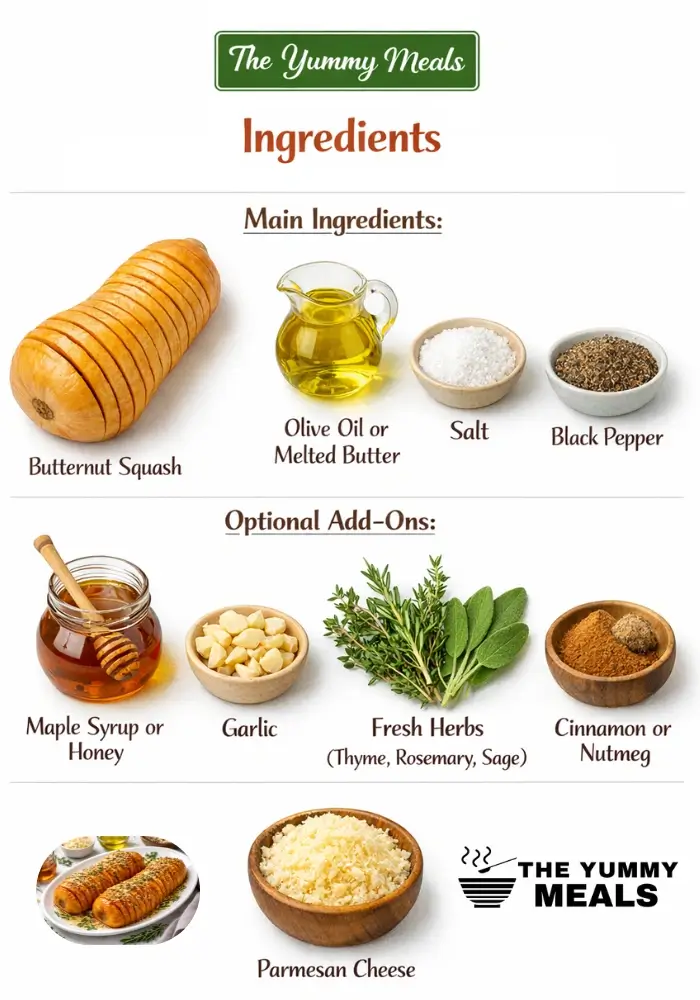
Ingredients Needed
Steps to Prepare the Butternut Squash
- Butternut Squash- Fresh butternut squash forms the base of the dish and becomes soft, sweet, and caramelized when roasted.
- Olive Oil or Melted Butter: This simple step helps the squash turn tender inside with lightly crisp edges.
- Salt: Salt enhances the natural sweetness of the squash and balances the flavors.
- Black Pepper: Freshly ground black pepper adds mild warmth and depth to the roasted squash.
Extra Flavor Add-Ons (Optional)
- Maple Syrup or Honey: These natural sweeteners add a subtle caramelized sweetness that pairs beautifully with roasted squash.
- Garlic: Garlic provides a savory flavor that balances the natural sweetness of the squash.
- Fresh Herbs (Thyme, Rosemary, Sage): These herbs bring earthy aromas and enhance the overall flavor of the dish.
- Cinnamon or Nutmeg: Warm spices add a cozy fall flavor that works well in holiday meals.
- Parmesan Cheese: Parmesan creates a salty, crispy layer when sprinkled over the squash during roasting.
Cooking Instructions for Hasselback Butternut Squash
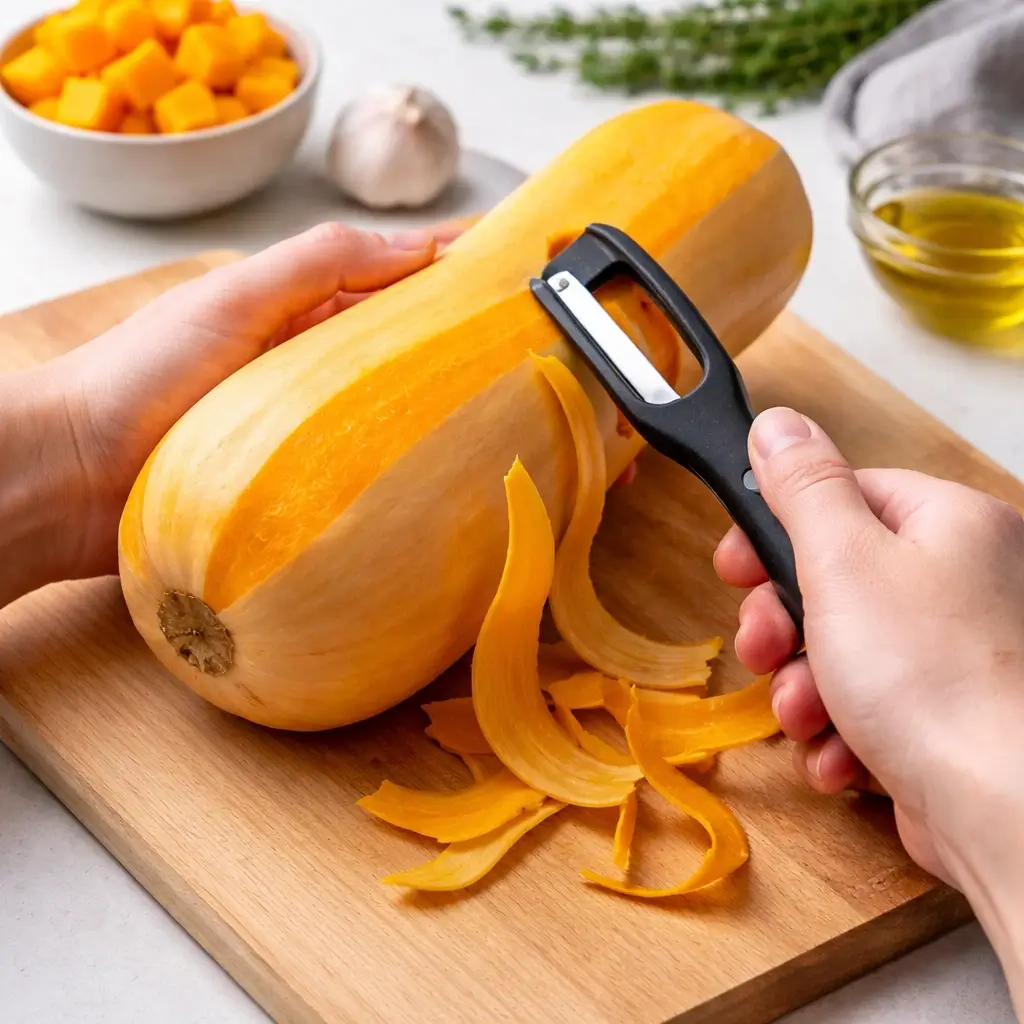
Prepare the Butternut Squash for Cooking
- Begin by carefully peeling the outer skin of the butternut squash with a vegetable peeler until the surface is smooth and clean.
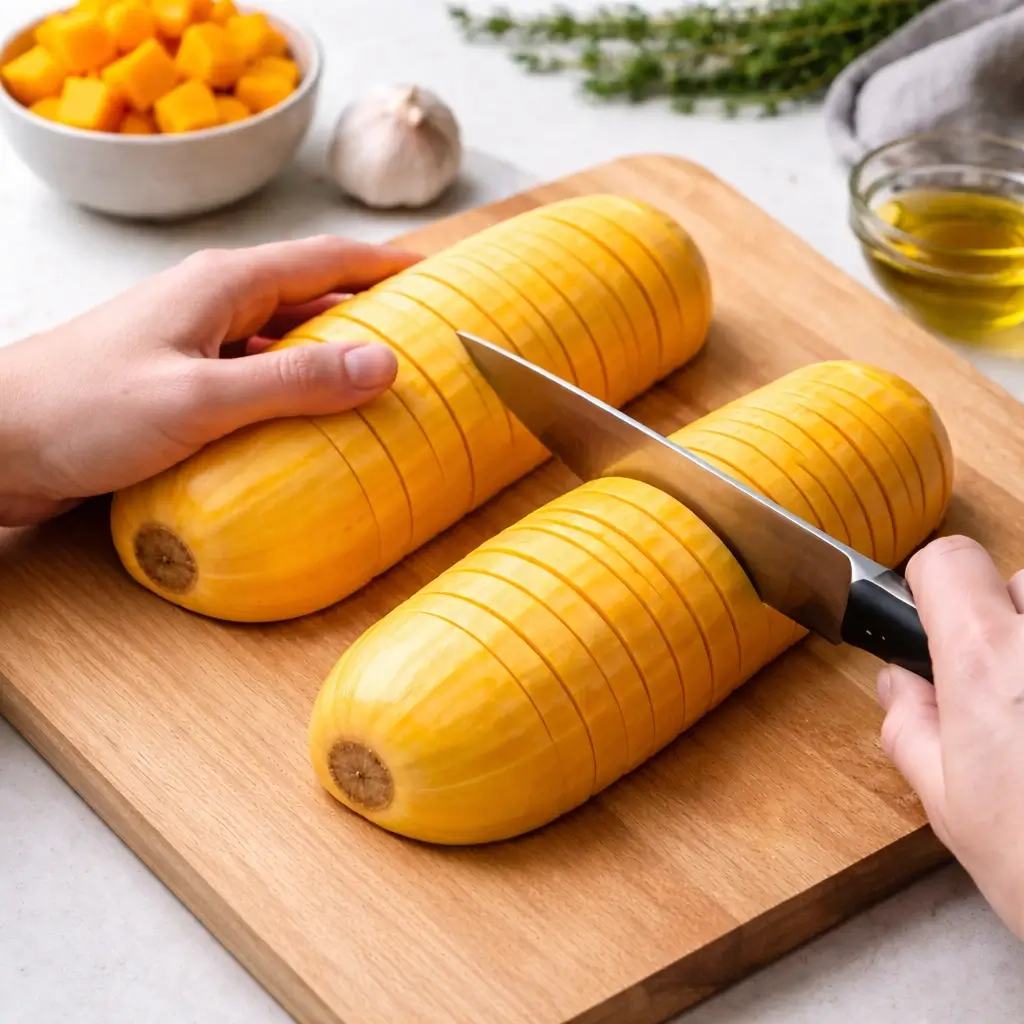
Cut the Squash in Hasselback Style
- Place the squash halves flat on a cutting board and slice thin cuts across the surface without cutting all the way through.
Lightly Season the Squash
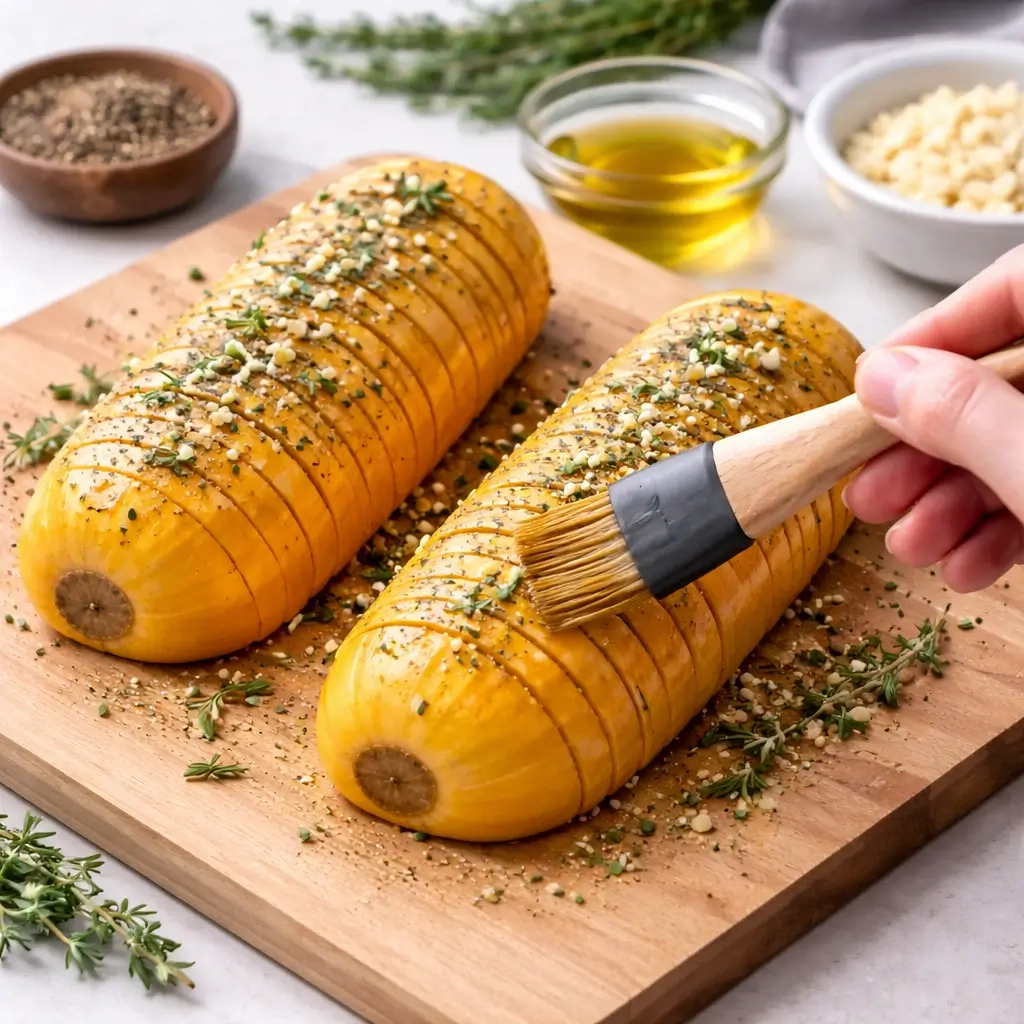
- Brush the squash with olive oil or melted butter, then sprinkle salt, pepper, and herbs over the top and between the slices.
Cook the Squash in the Oven
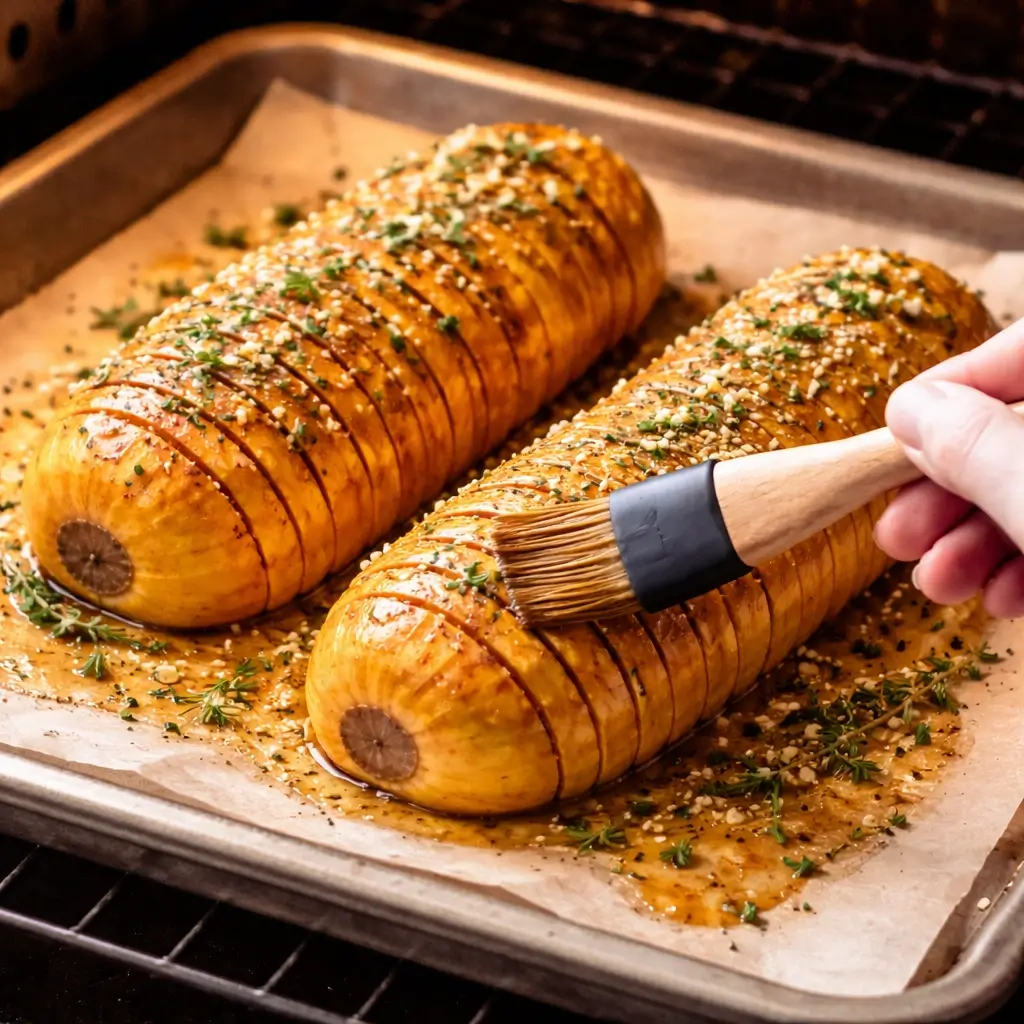
- Cook the squash in a preheated oven at 400°F (200°C) for 35–45 minutes, brushing it with oil or butter again halfway through for a richer flavor.
Complete the Dish with Final Toppings
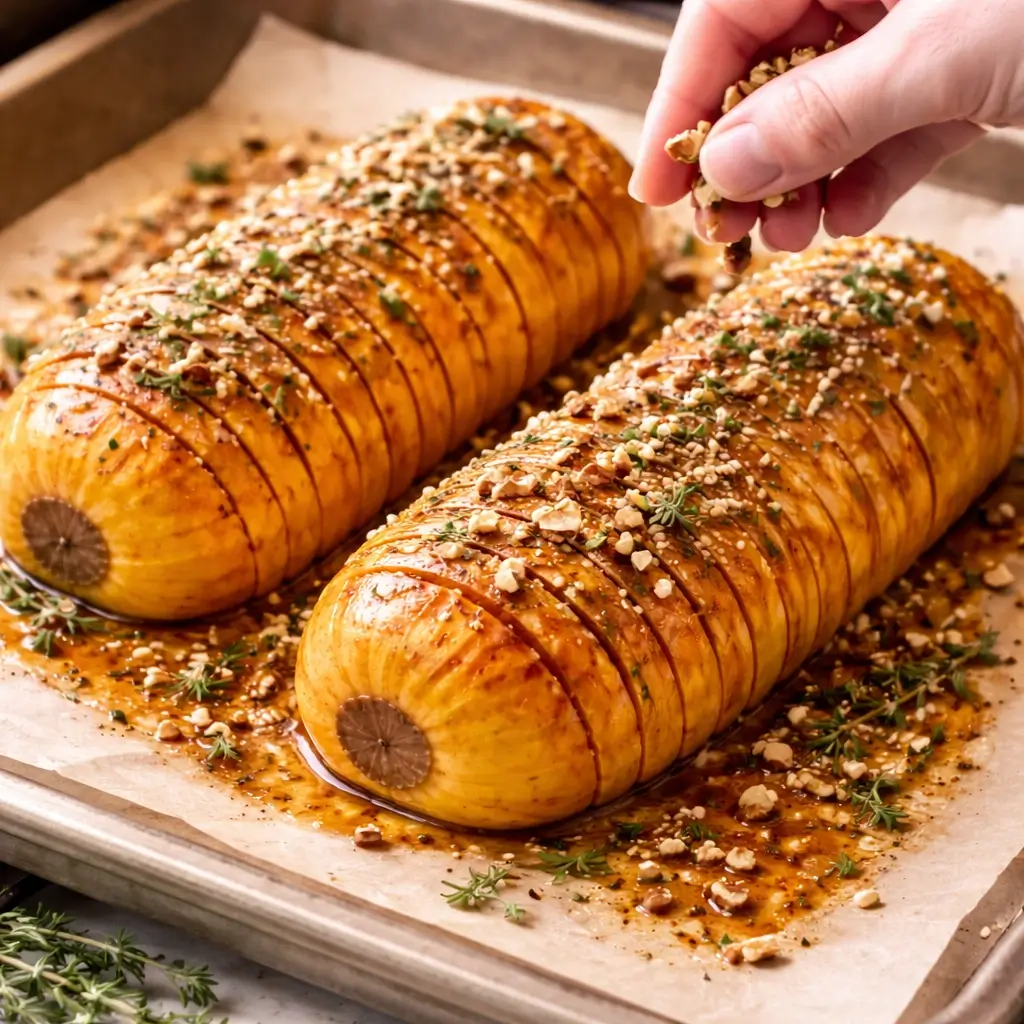
- As the baking time finishes, top the dish with maple glaze, herbs, grated cheese, or chopped nuts for extra taste and crunch.
Serve Fresh and Savor the Flavor
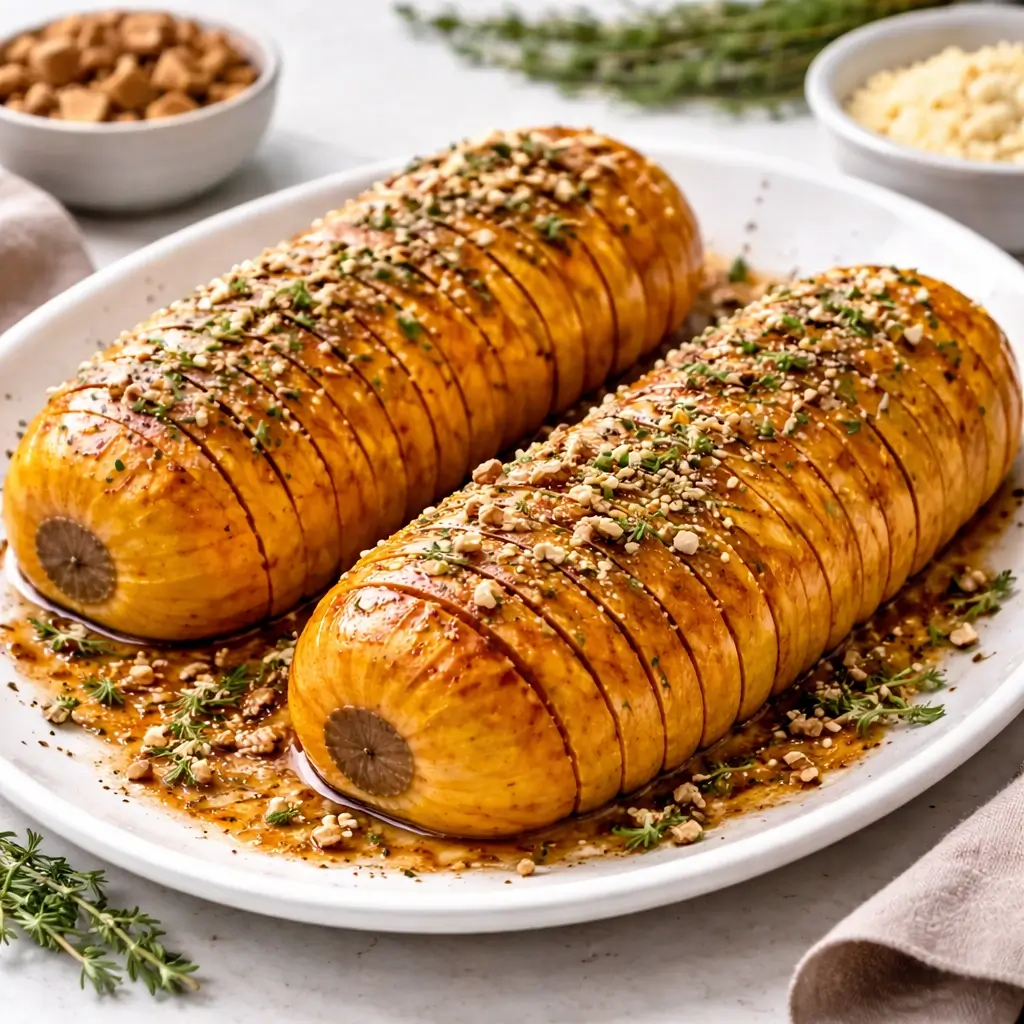
- Remove the squash from the oven, let it rest for a few minutes, and serve it warm as a delicious side dish.
Expert Tips for Perfect Recipe
- Slice Evenly for Uniform Cooking- When making Hasselback Butternut Squash, try to cut the slices evenly. This keeps the squash cooking evenly from top to bottom. Even slices also make the dish look neat and beautiful.
- Use Chopsticks or Wooden Spoons as Slicing Guides: Set chopsticks or wooden spoons along both sides of the squash before you start slicing. They help prevent the knife from cutting completely through the squash. This simple trick helps you prepare Hasselback Butternut Squash safely and easily.
- Brush Seasoning Between the Slices: Do not just season the top of the squash. Gently brush oil, butter, or spices between the slices. This helps the flavors absorb into every layer and makes the dish even more enjoyable.
- Roast Long Enough for Caramelization: Properly roasting the squash is essential for the best results. Let it cook until the edges turn slightly golden and caramelized. This step enhances the flavor and gives the squash a gentle, tender texture.
- Add Toppings Near the End of Baking: If you are adding cheese, herbs, or nuts, wait until the last few minutes of baking. This helps keep the toppings from burning and preserves their fresh flavor.
- Choose a Firm and Fresh Squash: Always start with a fresh and firm butternut squash. A good-quality squash cooks best and gives a sweeter taste. This small step helps your Hasselback Butternut Squash turn out perfect every time.
Hasselback Butternut Squash Variations
- Maple and Pecan Sweet Twist: The combination of maple and pecans adds a gentle sweetness and warmth to Hasselback Butternut Squash. The maple syrup adds gentle sweetness, while the pecans bring a light crunch.
- Garlic and Herb Roasted Flavor- Roast the squash with garlic, olive oil, and fresh herbs like thyme or rosemary. This savory option adds rich aroma and depth, making your Hasselback Butternut Squash taste comforting and flavorful.
- Parmesan Crusted Style: Sprinkle grated Parmesan cheese over the squash during the last minutes of roasting. The cheese melts and forms a light golden crust that adds a delicious salty taste.
- Sweet Cinnamon Butter Version: Mix melted butter with a little cinnamon and brown sugar. Brush it over the squash to create a warm, dessert-like taste that complements the squash’s natural sweetness.
- Spicy Chili and Honey Glaze: Combine honey with a pinch of chili flakes and brush it over the squash. This variation creates a balance of sweet heat that makes Hasselback Butternut Squash even more exciting to enjoy.

Serving Suggestions
- Roasted Chicken or Turkey: The sweetness of the squash pairs perfectly with savory roasted poultry dishes.
- Grilled Steak: A hearty grilled steak balances the soft texture and sweetness of the squash.
- Quinoa or Wild Rice: These grains create a healthy and filling meal when served alongside the squash.
- Holiday Dinner Spreads- Hasselback squash fits beautifully into Thanksgiving and holiday menus.
- Fresh Salads: A crisp green salad adds freshness and balance to the roasted vegetable dish.
Storage and Reheating Tips
- Store Leftovers Properly: Place leftover squash in an airtight container and store it in the refrigerator for up to three days.
- Reheat Without Drying Out: Warm the squash in a low-temperature oven with a small amount of butter or oil to maintain moisture.
- Freezing Option: Roasted squash can be frozen for up to two months, although the texture may soften slightly after thawing.
Frequently Asked Questions
Is it necessary to remove the skin from butternut squash before roasting?
Yes, it is best to peel the butternut squash before roasting. The skin can become tough to eat after cooking. Removing the peel helps the squash roast evenly and gives a softer, more pleasant texture.
How thin should Hasselback slices be?
The slices should be thin but not too close together. A spacing of about ⅛ to ¼ inch works well. This allows the heat to reach inside the squash and helps the slices open slightly during roasting.
Is it possible to prepare Hasselback Butternut Squash before serving?
Yes, you may get it ready earlier. Cut the squash, season it well, and keep it covered in the refrigerator for a few hours. When ready to serve, simply roast it fresh for the best flavor and texture.
Which herbs and spices work well with butternut squash?
Butternut squash pairs well with both sweet and savory spices. Popular choices include cinnamon, nutmeg, garlic, paprika, thyme, and rosemary. These spices enhance the natural sweetness and rich flavor of the squash.
Will this recipe work well in an air fryer?
Yes, you can cook it in an air fryer if the squash fits inside the basket. Cook at around 180–190°C (350–375°F) and check it occasionally. Cooking in an air fryer makes the edges a bit crispy while keeping the inside soft and tender.
Why are my slices not opening while roasting?
If the slices do not open, they may be cut too thick, or the squash may not have roasted long enough. Brushing oil or butter between the slices also helps them separate as the squash softens in the oven.
How do I keep Hasselback Butternut Squash from burning?
To prevent burning, roast the squash at a moderate temperature and keep an eye on it near the end of cooking. You can also cover it loosely with foil if the top begins to brown too quickly while the inside continues to cook.
Recipe Card

Hasselback Butternut Squash

Equipment
- Sharp knife
- Cutting board
- Baking sheet
- Parchment paper or foil
- Pastry Brush
- Spoon or small bowl for seasoning mixture
Ingredients
• 1 large butternut squash, peeled and halved
• 2 tablespoons olive oil, or use melted butter
• 1 teaspoon finely ground salt
• ½ teaspoon ground black pepper, freshly crushed
• 2 tablespoons maple syrup (optional, for a touch of sweetness)
• 2 cloves of garlic, minced finely
• Fresh thyme or rosemary sprigs, a few pieces
• 2 tablespoons freshly grated Parmesan cheese
Instructions
1. Turn the oven to 400°F (200°C) and prepare a baking sheet with parchment paper.
2. Peel the butternut squash, cut it in half lengthwise, and remove the seeds with a spoon.
3. Place the squash halves flat on a cutting board and carefully slice thin cuts across the surface without cutting completely through.
4. Brush the squash with olive oil or melted butter and sprinkle with salt, pepper, garlic, and herbs.
5. Roast in the oven for about 35–45 minutes until the squash becomes tender and lightly caramelized.
6. During the last few minutes, brush with maple syrup and sprinkle Parmesan cheese if desired.
7. When it comes out of the oven, let it cool a little, then serve warm.
Notes
- Choose a sharp knife for precise and uniform cuts.
- Chopsticks can help prevent cutting through the squash.
- Brush seasoning between slices for deeper flavor.
- A firm squash will give you the best texture when cooked.
- Add cheese or glaze near the end of baking.
- Do not overcrowd the baking tray.
- Enjoy it right after cooking for the finest flavor and texture.
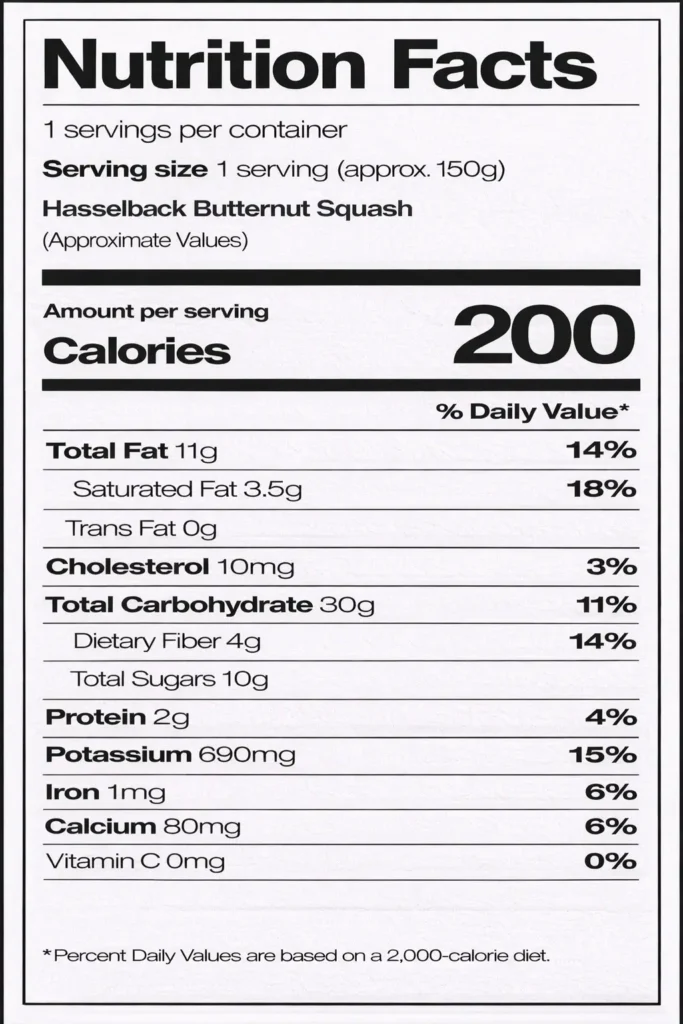
Nutrition Facts (Approximate Values)