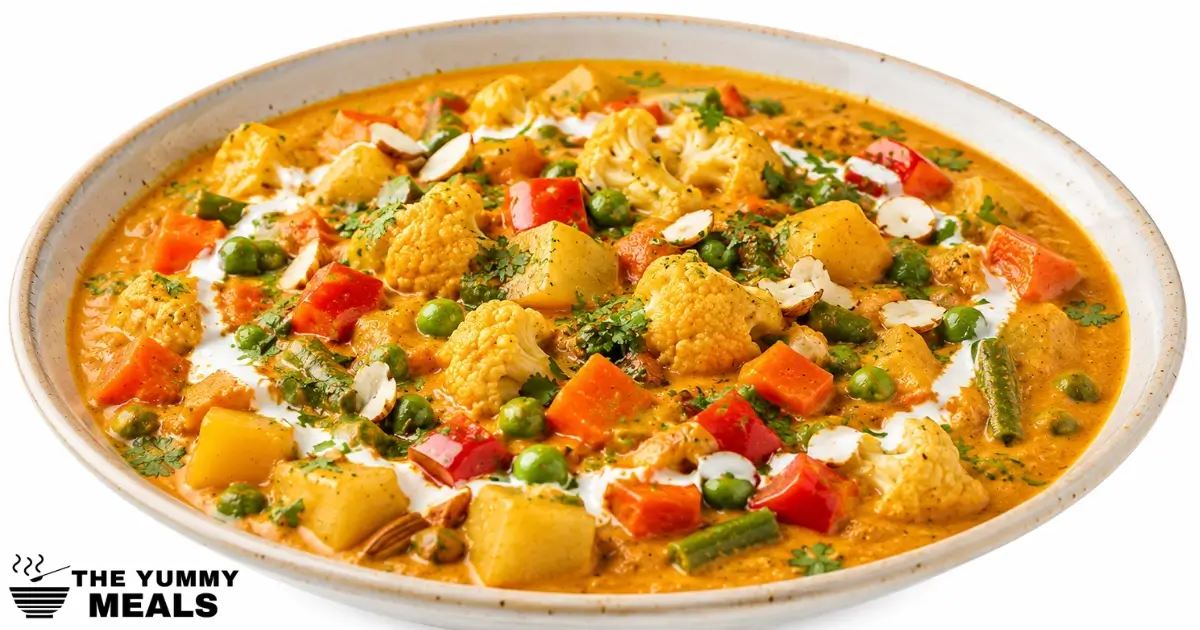
Vegetarian Korma is a rich, creamy, and comforting Indian curry loved by many. It combines mixed vegetables, yogurt, nuts, and gentle spices beautifully. The smooth gravy tastes flavorful without becoming overly spicy or heavy.

This popular dish holds a special place in traditional Indian cuisine today. Families often prepare it for celebrations, festive meals, holidays, and weekend dinners. Its mild flavors make every bite satisfying, warm, and wonderfully comforting.
You can easily serve this creamy curry with naan, roti, paratha, or steamed rice. The rich sauce pairs perfectly with soft breads and fluffy rice dishes for memorable family dinners and special occasions, with delicious Vegetarian Korma.
What Is Vegetarian Korma?
Vegetarian korma is a rich, creamy Indian curry made using mixed vegetables and spices. You usually prepare it with yogurt, nuts, cream, or coconut milk for richness.
Korma began in classic Mughlai cuisine and slowly gained popularity across India. Royal kitchens prepared slow-cooked korma dishes using aromatic spices, nuts, and flavorful creamy sauces. Today, korma remains a favorite comfort dish for family meals and celebrations.
Vegetable korma differs from many Indian curries because its flavors taste milder and creamier. Other curries often contain stronger heat, while korma focuses on balanced, comforting richness instead. You can easily enjoy korma without overwhelming spicy flavors during lunch or dinner.
The gravy feels creamy, smooth, and lightly thick from blended ingredients. Common ingredients include carrots, peas, potatoes, beans, cauliflower, tomatoes, and aromatic whole spices. Vegetarian korma pairs beautifully with naan, roti, paratha, jeera rice, or steamed basmati rice.

Why You Will Love This Recipe
- Creamy and Flavorful: You will love the rich, creamy gravy and perfectly balanced mild Indian spices. Vegetarian korma tastes rich, comforting, and deeply flavorful in every bite.
- Packed with Vegetables: This curry includes colorful vegetables that make your meal wholesome and naturally nourishing daily. Every serving offers delicious texture, fresh flavor, and balanced, wholesome nutrition.
- Naturally Vegetarian and Customizable: You can easily customize vegetarian korma using your favorite vegetables and preferred creamy ingredients. This flexibility helps create flavorful meals matching your family’s favorite tastes.
- Great for Meal Prep- Vegetarian korma stores beautifully and tastes even better after resting for several hours overnight. You can cook larger portions easily for busy weekday family dinners.
- Restaurant-Style Taste at Home: You can create rich restaurant-quality flavors without using complicated cooking techniques or ingredients. The smooth gravy gives your homemade curry an elegant and satisfying special touch.
- Mild Spice Level Suitable for Families: The gentle spice level makes this curry perfect for children and family dinners together. Vegetarian korma feels warm and flavorful without becoming overly spicy or heavy afterward.
Ingredients You Will Need
Vegetables
- Carrots: Carrots add natural sweetness, bright color, and soft texture to your vegetarian korma.
- Green Peas: Green peas bring freshness, light sweetness, and extra texture to every flavorful bite.
- Potatoes: Potatoes make the curry filling creamy and wonderfully comforting for your family meals.
- Beans- Beans add a slight crunch and balance the rich korma gravy beautifully together.
- Cauliflower: Cauliflower absorbs the creamy sauce well and tastes delicious with mild Indian spices.
- Bell Peppers: Bell peppers add vibrant color, gentle sweetness, and fresh flavor to the curry.
For the Korma Gravy
- Onion: Onions create a flavorful base and give your gravy natural sweetness and depth.
- Tomatoes: Tomatoes add mild tanginess and balance the creamy richness of the korma sauce.
- Ginger-Garlic Paste- Ginger-garlic paste adds a bold aroma and enhances the overall curry flavor beautifully.
- Cashews or Almonds: Cashews or almonds make the gravy smooth, creamy, rich, and naturally thick-textured.
- Yogurt or Coconut Milk- Yogurt or coconut milk creates a silky texture and rich, comforting flavor profile.
- Cream (Optional): Cream adds extra richness and smooth restaurant-style texture to korma.
Whole Spices
- Bay Leaf: Bay leaf adds an earthy flavor and gently boosts the curry’s aroma.
- Cinnamon- Cinnamon provides mild sweetness and comforting warmth throughout the rich korma gravy beautifully.
- Cardamom: Cardamom adds a delicate fragrance and lightly sweet flavor to your curry.
- Cloves: Cloves bring warm spice and rich flavor to creamy korma dishes.
- Cumin Seeds: Cumin seeds bring an earthy flavor and create a classic Indian curry taste perfectly.

Ground Spices
- Turmeric Powder: Turmeric powder adds a beautiful golden color and mild earthy flavor to your curry.
- Coriander Powder: Coriander powder gives a light citrus flavor and balances the creamy gravy wonderfully.
- Red Chili Powder: Red chili powder adds gentle heat and enhances overall flavor without overpowering ingredients.
- Garam Masala: Garam masala adds warmth, aroma, and authentic flavor to korma.
Garnish
- Fresh Coriander Leaves: Fresh coriander leaves add bright freshness and beautiful color before serving your curry.
- Cream Drizzle: Cream drizzles make the curry look luxurious and highly appetizing.
- Toasted Nuts: Toasted nuts provide a delicious crunch and enhance the creamy texture of korma.
Preparation Before Cooking
- Wash and Chop Vegetables- Wash vegetables thoroughly and chop evenly for uniform cooking results.
- Soak Cashews or Almonds- Soften nuts in warm water for velvety smooth korma gravy.
- Prepare Onion-Tomato Base: Keep chopped onions and tomatoes ready for quicker meal preparation.
- Measure Spices: Measure spices before cooking for a balanced flavor and organized preparation.
- Blanch Vegetables if Needed- Blanch hard vegetables briefly to keep texture fresh and colorful.
How to Make Vegetarian Korma
Prepare the Vegetables
- Wash and chop vegetables evenly for quicker and uniform cooking. Steam or boil vegetables lightly until tender yet slightly firm.

Make the Korma Paste
- Sauté onions, tomatoes, ginger, and garlic until soft and fragrant. Add cashews or almonds, then blend into a smooth creamy paste.

Cook the Gravy
- Heat oil or ghee in a deep pan over medium heat. Add whole spices and cook briefly until fragrant and flavorful throughout the kitchen. Stir in the prepared paste and cook until thick and aromatic.

Add Spices and Creaminess
- Mix turmeric, coriander powder, red chili powder, and garam masala into the gravy. Add yogurt, cream, or coconut milk for a rich, creamy texture and flavor. Simmer gently and stir occasionally to prevent the gravy from sticking.

Combine Vegetables
- Add the cooked vegetables to the prepared korma gravy and mix everything carefully. Simmer for several minutes until the vegetables absorb the delicious, flavorful creamy sauce.

Garnish and Serve
- Garnish vegetarian korma with coriander, cream drizzle, and toasted nuts. Serve hot with naan, roti, paratha, or steamed rice for comforting family meals.

Expert Tips for Making the Best Results
- Do Not Overcook Vegetables: Cook your vegetables until slightly tender while keeping their texture firm and fresh-looking. Cooking vegetables too long makes the vegetarian korma overly mushy.
- Use Fresh Spices: Fresh spices always create a deeper aroma and better flavor in your homemade curry dishes. Older spices taste dull and affect the authentic flavor of vegetarian korma noticeably overall.
- Blend Gravy Until Smooth: Blend the gravy completely smooth for rich restaurant-style texture and creamy consistency every time. Smooth gravy coats vegetables beautifully and improves the korma texture.
- Adjust Consistency Carefully- Add water slowly while simmering to achieve your preferred curry thickness without mistakes easily. Thick gravy feels rich, while thinner gravy pairs perfectly with rice and naan.
- Balance Sweetness and Spice- Balance mild sweetness and spice carefully for a flavorful and comforting vegetarian korma every single time. Proper seasoning creates delicious harmony and makes your curry taste more satisfying overall.
Recipe Variations
Vegan Vegetable Korma
- You can use coconut milk instead of cream or yogurt. Vegan korma tastes creamy, rich, and completely dairy-free.
South Indian Style Korma
- This variation includes coconut, curry leaves, and fennel seeds for a deeper regional flavor. South Indian vegetarian korma tastes aromatic, mildly spicy, and wonderfully comforting with soft vegetables included.
Mughlai Vegetable Korma
- Mughlai korma combines cream, nuts, and spices for luxurious curry flavors. This royal-style curry feels elegant, flavorful, and ideal for festive family dinners and gatherings.
Paneer Korma
- You can add soft paneer cubes for extra richness and satisfying texture in every bite. Paneer korma tastes creamy, hearty, and perfect for special homemade dinner meals together.
Mixed Vegetable Kurma
- This variation combines several vegetables for a colorful texture and balanced flavor in every serving. Mixed vegetable kurma feels wholesome, filling, and naturally delicious with naan or steamed rice.

Serving Suggestions
- Naan- Warm naan perfectly soaks up the creamy and flavorful vegetarian korma gravy beautifully.
- Roti- Soft roti creates a light, wholesome, and satisfying pairing with rich vegetarian korma dishes.
- Paratha: Flaky paratha adds a buttery texture and tastes delicious with creamy vegetarian korma recipes.
- Jeera Rice: Jeera rice complements vegetarian korma perfectly with its mild cumin flavor and fluffy texture.
- Basmati Rice: Fragrant basmati rice complements creamy korma sauce and enhances every meal.
- Pulao- Vegetable pulao pairs beautifully with vegetarian korma for festive and satisfying family dinners together.
Storage and Reheating Tips
- Refrigeration Instructions: Store vegetarian korma in airtight containers to keep the curry fresh and flavorful longer.
- Freezing Tips- Freeze vegetarian korma properly for convenient meals and longer fresh flavor.
- Best Reheating Methods: Reheat the curry slowly to a smooth texture and balanced, delicious flavor.
- Shelf Life: Vegetarian korma stays fresh refrigerated and lasts longer when properly frozen.

Frequently Asked Questions
Can you make vegetarian korma without cream?
Yes, coconut milk creates creamy vegetarian korma without heavy cream. Coconut milk creates a creamy texture while keeping the curry dairy-free.
What vegetables work best in vegetarian korma?
You can use carrots, peas, potatoes, beans, cauliflower, and bell peppers successfully together. These vegetables absorb flavors beautifully and create a rich korma texture perfectly.
Can you freeze vegetarian korma for later meals?
Yes, you can freeze vegetarian korma in airtight containers for convenient future family meals. The curry stays creamy and flavorful when properly stored frozen.
What makes vegetarian korma creamy and rich?
Blended nuts, cream, or yogurt create a smooth and creamy curry texture. These ingredients add richness and balanced flavor to vegetarian korma.
Which rice pairs best with vegetarian korma?
Jeera rice, basmati rice, and vegetable pulao pair wonderfully with creamy vegetarian korma dishes. Their soft texture balances the rich curry and creates satisfying, comforting meals easily.
How many days does refrigerated vegetarian korma stay fresh?
Properly refrigerated vegetarian korma stays fresh for up to four days. Store the curry inside airtight containers to maintain flavor and creamy texture longer.
Read More: Aloo Matar Recipe
Recipe Card

Vegetarian Korma

Equipment
- Blender or mixer
- Pan or kadai
- Knife
- Chopping board
- Measuring spoons and cups
Ingredients
• 1 cup carrots, chopped
• 1 cup potatoes, chopped
• 1/2 cup green peas
• 1/2 cup beans, chopped
• 1 cup cauliflower florets
• 1/2 cup bell peppers, chopped
• 2 medium onions, sliced
• 2 medium tomatoes, chopped
• 1 tablespoon ginger-garlic paste
• 10 cashews or almonds
• 1/2 cup yogurt or coconut milk
• 2 tablespoons cream (optional)
• 2 tablespoons oil or ghee
• 1 bay leaf
• 1 small cinnamon stick
• 2 cardamom pods
• 3 cloves
• 1 teaspoon cumin seeds
• 1/2 teaspoon turmeric powder
• 1 teaspoon coriander powder
• 1/2 teaspoon red chili powder
• 1/2 teaspoon garam masala
• Salt according to taste
• Fresh coriander leaves for garnish.
• Toasted nuts for garnish
Instructions
1. Wash and chop vegetables evenly for uniform cooking results.
2. Steam vegetables gently, keeping their texture firm and perfectly tender.
3. Soak cashews in warm water for smoother, creamy gravy.
4. Heat oil or ghee gently in a deep pan.
5. Add whole spices and sauté until aromatic and fragrant.
6. Cook onions until soft, golden, and slightly caramelized properly.
7. Add tomatoes and ginger-garlic paste, then cook everything thoroughly.
8. Blend the cooked mixture with cashews into a smooth, creamy paste.
9. Cook the korma paste until thick and aromatic throughout.
10. Add ground spices and salt for a rich, balanced curry flavor.
11. Stir yogurt, cream, or coconut milk into prepared gravy.
12. Add cooked vegetables and mix gently with creamy gravy.
13. Allow vegetables to simmer slowly in rich and aromatic curry.
14. Garnish with coriander leaves and toasted nuts before serving.
Notes
- Chop vegetables evenly for better texture and balanced cooking results.
- Mushy vegetables can spoil the rich flavor of curry.
- Silky blended gravy makes korma taste rich and restaurant-style.
- Fresh spices create a deeper aroma and authentic homemade curry flavor.
- Add warm water gradually for a perfectly balanced curry consistency.
- Coconut milk works perfectly for rich, creamy vegan korma recipes.
Nutrition Facts (Approximate Values)
